
Ever since generative engine optimisation became a thing, we’ve been hearing all types of “proven strategies” that are supposed to help you rank in AI search. But the reality is that many of the tactics people talk about online are nothing more than pure myths that credible research or Google itself has dismissed.
That’s why, in this guide, we’ll review the most popular AI SEO myths that will only waste your time, no matter how much some people swear by them. After that, we’ll cover some of the most effective tactics backed by several trustworthy studies.
7 most common AI SEO myths
Let’s first take a look at the myths and understand why exactly these claims aren’t true.
Myth 1: GEO is exactly the same as traditional SEO
One of the most popular statements you might have heard is that GEO and SEO are basically the same thing.
Of course, there is a lot of overlap. And it’s nearly impossible to be successful at GEO without having a proper SEO foundation. We’ll talk about that later in the guide.
But here is the truth: you can’t always treat SEO and GEO as the same thing.
If you rely on traditional SEO alone and make no changes whatsoever, your AI search performance may not be as strong as it could be.
Frankly, if these concepts were the same, we wouldn’t even have to write this article. If everyone who was doing SEO automatically got great visibility in AI search, there wouldn’t be so many confused businesses out there wondering how to get cited by AI.
Now, here are some real facts:
- Nobody knows for sure which algorithms AI systems use.
- But the same is true of Google. Even though the SEO industry has existed for decades, there is no official Google page that lists all its ranking factors and their importance.
Still, AI visibility doesn’t perfectly mirror traditional Google rankings. In fact, only 12% of links cited by LLMs show up in the top 10 Google search results for the same prompt.
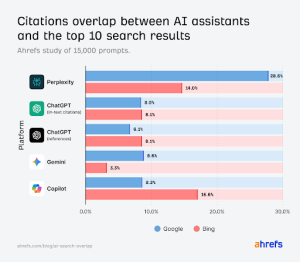
This doesn’t mean that traditional SEO doesn’t matter anymore. Not at all. It simply means that it has to evolve and expand, adding that GEO layer.
Myth 2: You can predictably influence LLM mentions
Imagine if every time you googled the exact same thing, you got different search results. That would make SEO as we know it nearly impossible because there would be no top 10 results.
Well, that’s exactly what happens with LLMs.
In fact, there’s less than a 1 in 100 chance that ChatGPT or Google’s AI, if asked 100 times, will give you the same list of brands in any two responses.
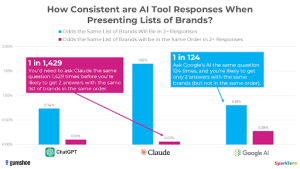
While Google search results can change, they are relatively stable. But LLMs don’t offer the same luxury.
As a result, when it comes to LLM optimisation, you can’t:
- Predictably influence LLM mentions,
- Reliably measure them every single time,
- See your progress like you would with Google rankings.
So, if someone guarantees you stable rankings in AI search, just keep this in mind.
Still, this doesn’t mean you can’t measure AI visibility at all. You just can’t rely on a single prompt or response.
Instead, you need to run multiple relevant prompts repeatedly over time to build a more accurate picture of how visible your brand actually is.
Usually, you’ll start seeing patterns.
Some brands dominate and appear almost every time, while others are mentioned often, sometimes, or only occasionally. So, instead of tracking a fixed “ranking,” it makes more sense to track how frequently your brand appears across a larger set of prompts and over time.
It might not give you a perfectly accurate picture.
But if your prompt set is large enough and you track it consistently over time, it can give you a pretty reasonable idea of where you stand.
Myth 3: LLMs.txt helps AI visibility
There has been a lot of speculation about llms.txt. Essentially, many people believe that it could make your website more discoverable in AI search.
But this is really not the case for a couple of reasons:
- First of all, llms.txt was never meant to improve AI discoverability. Its initial goal was to help AI systems find and understand a website’s most important content.
- Google’s John Mueller has mentioned that llms.txt can’t help improve your AI visibility on several occasions.
- And lastly, when Ahrefs analysed 137,000 websites with llms.txt, they discovered that 97% of llms.txt files weren’t even read.
Overall, if your goal is to improve AI search visibility, there is no real evidence that llms.txt can help with this.
Myth 4: Content chunking and information blocks are necessary for citations
One of the most popular recommendations for generative engine optimisation has been to make your text more readable. This isn’t a bad idea at all. But it doesn’t mean that you have to go to extremes and write in tiny chunks for AI to read your content.
Sure, your content structure has to be on-point. You need:
- Clear H1, H2, H3 headings,
- Logical paragraphs,
- And main information not buried under a mountain of fluff.
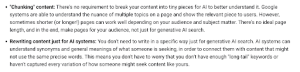
But if you care about user experience, most likely, your content is already well structured. So, there is no need for any elaborate editing. Google confirms that AI systems can access and cite your content without chunking or any other specific writing formats.
Myth 5: More content gives you more exposure
When websites started noticing the rise of zero-click searches, some decided to save the day by publishing more content. After all, it’s so easy to generate it these days with all the AI tools.
But this strategy somehow manages to get almost everything wrong:
- Superficial AI-generated content won’t help you gain more visibility because everyone can generate the exact same thing.
- Even if you write it yourself, publishing more content will likely lead to sacrificing quality. And in the end, it will just waste your resources and crawling budget.
- The number of site pages has nearly no correlation with AI visibility (based on the 75k brand analysis).
- When you create lots of overlapping content, you risk your pages cannibalising each other. As a result, they may compete for the same queries and make it harder for any one page to rank well.
So, instead of writing more content, it’s much better to focus on deeper, unique, and more expert pieces.
Myth 6: Reddit spam can help you get cited
After businesses heard that Reddit is one of the most cited sources in AI, many started spamming their way into AI citations. But simply writing your brand name everywhere won’t do any good.
And there are many reasons for that:
- Context: One of the reasons Reddit mentions work is because they help AI systems associate your business with a particular topic. So, simply having random brand mentions won’t provide enough context to make it work.
- Reddit’s anti-spam nature: It’s hard to keep up with a spammy Reddit strategy in the long run. This platform has always been fighting low-quality, promotional posts and comments. But now, they’ve taken it to the next level with the new Reddit spam filters that catch around 25,000 new spam posts every day.
- Human factor and brand image: Above all, let’s be honest, everyone hates spammers. So, it can’t really make your brand any stronger.
Building a Reddit presence, or even a community, is a great idea for AI SEO optimisation. But turning into a spammer there is just not worth it.
What’s the difference between the two?
Spam is obvious. Usually it comes down to looking for any relevant posts and spamming your tool/product/service/brand name there.
But a smart Reddit strategy is different.
It can vary from brand to brand. But here are some of the most effective tactics:
- Look for existing brand mentions. Read what people are saying and join the discussion (if it makes sense).
- Create real profiles for your team members. Ideally, these should be subject-matter experts, not just marketers.
- Answer questions related to your industry. Make your responses genuinely useful, and if you mention your company, disclose that you work there. Reddit values transparency.
- Share some truly valuable content in relevant subreddits. Before posting anything, read the guidelines of each subreddit. Sometimes, you might need to contact moderators before publishing.
- Consider running AMA sessions with experts from your team. Simply pitch the idea to relevant subreddits, and make sure you don’t turn it into a promo session.
Myth 7: Treating “information gain” as a confirmed ranking factor
Many people use the term “information gain” as if it were a proven ranking factor. But in reality, Google hasn’t confirmed it as one.
Don’t get us wrong. The idea behind this concept is great.
By all means, it’s extremely valuable to add unique information to every piece of content, instead of just recycling what’s already published. Google itself encourages creating original content that adds unique value.
The issue is that there’s no guarantee that adding ‘information gain’ will directly improve your rankings. Yes, Google has a patent related to information gain, but that doesn’t make it a confirmed ranking factor.
So, for sure, add original ideas, examples, research, or real-life experience to your posts. It makes your content more useful for readers, helps you grow your credibility, and can also lead to more AI citations.
But don’t obsess over how much information gain there is in each piece of content you publish, as it isn’t even a publicly available metric.
What actually improves AI search visibility
Now that we’ve covered the myths, let’s talk about the tactics that actually work for better AI search rankings.
1. Build a traditional SEO foundation
Remember how we said that GEO and SEO aren’t the same thing? They aren’t, but AI search systems still rely heavily on website content to generate their answers.
That’s why a strong SEO foundation is still a must.
You can’t expect to gain any decent AI search visibility if your website isn’t secure, takes ages to load, isn’t crawlable, or has indexing issues. Whether it’s technical, on-page, or off-page SEO, they still matter.
Besides, AI search doesn’t replace traditional search, at least not yet:
- Google’s monthly active user base is more than five times larger than ChatGPT’s.
- 95% of ChatGPT users also use Google.
- AI search systems are typically only a part of the journey. Many users will conduct research on ChatGPT or other LLMs, and also type a commercial term into Google.
That’s why it’s still important to have a presence across traditional search engines, too.
So, if an SEO audit isn’t something you do regularly, start there before doing anything else on this list.
2. Use a clear and direct content structure
While you don’t need to use content chunking to get AI citations, it’s still important to structure your content well:
- Have clear headings and a logical hierarchy. They should be descriptive and accurately reflect the content of each section. Ideally, each heading should focus on one main idea.
- Lead with a direct answer, instead of fluff. If a heading asks for a definition, give the definition first. If an H2 promises a list, make sure the H3S deliver that list. When appropriate, you can even skip a generic introduction and start with the answer.
- Use an inverted pyramid principle. Start with the most important information and add supporting details later.
These simple rules help you organize your content better. While there’s no guarantee they’ll help you get more citations, they make your content clearer and easier to extract.
And this can matter because AI systems don’t necessarily read every source page in full. For example, a 2026 RESONEO study found that ChatGPT often answered based on the page title and a roughly 200-character snippet instead of opening the full page. In fact, ChatGPT opened only around 1 in 80 retrieved pages.
That’s another reason to make your important information easy to find and understand.
Yet again, there is no golden standard. Different LLMs retrieve information in different ways, and these systems can change at any time. So, it’s much better to focus on the value your content delivers rather than chasing quick formatting fixes.
3. Keep your positioning and business details consistent across the web
It’s nearly impossible to get your brand recommended by AI when every page online says different things about your business.
And if your company has existed for some years, most likely, you have a lot of inconsistent information across the web.
That’s why it’s absolutely essential to:
- Update your old landing pages, service/product pages, About Us, Meet The Team, and even relevant blog posts. If some of them are no longer necessary, consider removing them carefully and with the proper technical SEO setup, including redirects where needed.
- Double-check your social media descriptions.
- Update all the details on review platforms (G2, Capterra, Yelp, Tripadvisor).
- Edit your Google Business Profile if applicable and necessary.
One handy thing you can do is to use different queries related to your brand and check what Google AI Overviews and LLMs have to say. Is it accurate? What sources do they cite? This simple review can help you understand what to change.
4. Build strong topical authority
How trusted and well-known are you in your industry?
This is essentially the question that topical authority answers. While it isn’t an actual metric you can check in your typical SEO tool, it’s one of the major factors for AI search optimisation.
When AI recommends brands, its goal is to find a quick and obvious answer.
So, it won’t “give you a chance” or “think that you have potential.” It will simply choose a brand that has a crystal-clear positioning and expertise in its niche. That’s why every business that wants to get cited by AI has to work on its topical authority.
Essentially, it consists of two elements:
- What you publish on your website: Make sure you share highly expert content that shows your own opinions, unique insights, research, case studies, and so on. AI-driven content strategy isn’t about keyword optimisation. It’s about your expertise.
- What people say about you beyond your website: Take good care of your brand presence and image across the web, from off-page SEO to social media.
5. Grow brand visibility beyond your website
These days, link building isn’t just about getting backlinks to your website anymore. You need much broader visibility.
AI systems look at your overall brand exposure, not links alone. That’s why everyone is talking about brand mentions (including unlinked ones). And why digital PR is becoming much more important.
It’s still essential to do traditional link building for discoverability and authority.
But you need to add an extra layer of visibility by getting contextual brand mentions across the internet. This is where social media, communities, forums, media outlets, and other platforms can help.
So, your SEO team can’t do that alone. They have to work closely with marketers, digital PR experts, social media managers, community managers, the product team, etc.
6. Get YouTube mentions
YouTube mentions show one of the strongest correlations with AI visibility. This includes mentions in video titles, transcripts, or descriptions.
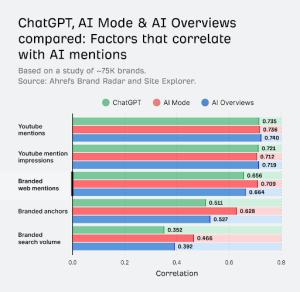
But that doesn’t necessarily mean creating your own YouTube content. There are many more strategies you can use:
- If you have business partners who have YouTube channels, consider recording joint videos with them.
- Find smaller bloggers in your niche and contact them to ask for a video review of your product/service.
- Find YouTubers who create lists of tools, brands, etc., in your industry, and reach out to them.
- Go through platforms like Quoted, SourceBottle, Featured, etc., and look for podcast opportunities. You can send a pitch and get invited to an interview.
- Participate in webinars where your team members can share some industry news or insights, and so on.
Views and likes don’t matter that much here. The main goal is to get more brand mentions in the relevant context.
7. Get included on pages that already show up in AI search
This is probably the most logical point of all. If a page is already cited in AI, showing up there could make you more visible in AI search, too.
Here is how it could work:
- Check what pages get cited for your main queries.
- Find the contacts for each of those websites (ideally, try to connect with the writer or blogger directly).
- Reach out to them and ask to get your brand name included in their post, offering some value. Remember that it can be an unlinked brand mention.
Of course, it won’t work every time. But this could be one of your GEO tactics.
8. Show up in relevant listicles
Listicles are one of the most-cited content formats in AI search. That’s why showing up in the “best/top” articles has become such a popular tactic.
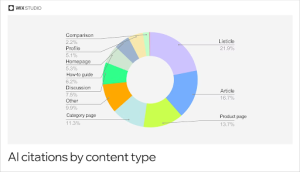
Still, for this strategy to work, the listicle has to be published on a high-quality industry website. So before you get included anywhere, check whether the website:
- Publishes content in your niche or is closely related to your industry.
- Has good SEO metrics, quality content, and a good editorial filter.
You can usually find these opportunities through link building outreach or through platforms like Quoted, Featured, etc.
Another important detail is that self-promotional listicles don’t perform nearly as well as the ones published on other websites. According to the same Wix study, self-promo listicles you post on your own site get cited 4x less often.
9. Create profiles on review platforms
AI often cites G2, Capterra, TrustRadius, Clutch, and other review platforms, especially when the user asks to recommend a brand. You’ve probably seen it yourself:
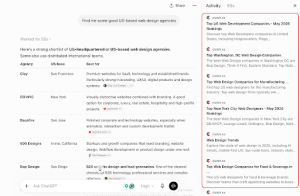
It’s quite logical, as these listings have real customer reviews and come from trustworthy platforms.
So, the least you can do is:
- Create profiles on platforms relevant to your niche.
- Add detailed and accurate business information to each profile.
- Ask your clients to leave reviews, where they share their experience (this can include many details that other prospects are also searching for).
10. Build social media and community presence
When it comes to traditional SEO, social media can be an indirect signal and contribute to a more natural backlink profile. But it doesn’t directly influence your rankings.
Things are different with generative engine optimisation, though:
- First of all, presence on different platforms improves your brand visibility, builds context and topical authority around your business, and can generate brand mentions.
- But on top of this, LinkedIn, Facebook, Instagram, Reddit, Quora, etc., are some of the most cited websites in AI search.
That’s why social media management can help you with more than just engagement and lead generation. It can actually contribute to your AI visibility.
Keep testing AI SEO claims, but question the hype
SEO for AI search is still a work in progress. We’ll face many more changes, updates, strategies, and, of course, myths.
So, the most important takeaway of this entire guide is to try different approaches but still question random things you hear on the internet.
And if you aren’t sure whether you can do that alone, we might know a team who can help.
At Quirky Digital, we combine both traditional SEO and generative engine optimisation to deliver the best results. This way, you can:
- Be more visible in traditional and AI search.
- Get more brand mentions and AI citations.
- Build actual authority that can withstand search updates.
If that sounds like something your brand needs, we offer a free GEO and SEO audit to understand how your business is doing in Google and AI search.