With the world becoming a lot more efficient, there comes more impatience, and if you can’t provide a user with what they want quickly, they’re going to leave. Gone are the days when we have to seep through libraries and books to find information – you can now get it with a click of a button… or sometimes not even a click.
Zero click searches have become something that SEOs around the world are having to take into consideration every day, with consumer and customer behaviour changing, so if you’re looking to grasp the attention of your audience, give them what they want, and make sure you don’t fall behind as a business on search engines, we have you covered in this blog.
What are zero click searches?
Zero click searches are essentially when a user searches for their desired query, and then it is directly answered on the search engine results page (SERP) without them having to click a button. So, they can get all the information they need without doing anything, and then they can leave.
So, you’ll still have to type something in on the search engine that you want to find out about, but you won’t need to click onto anyone’s site to find the information, because it’ll already be shown.
Here’s a quick example of what it would look like if I ask, ‘How old are Google?’
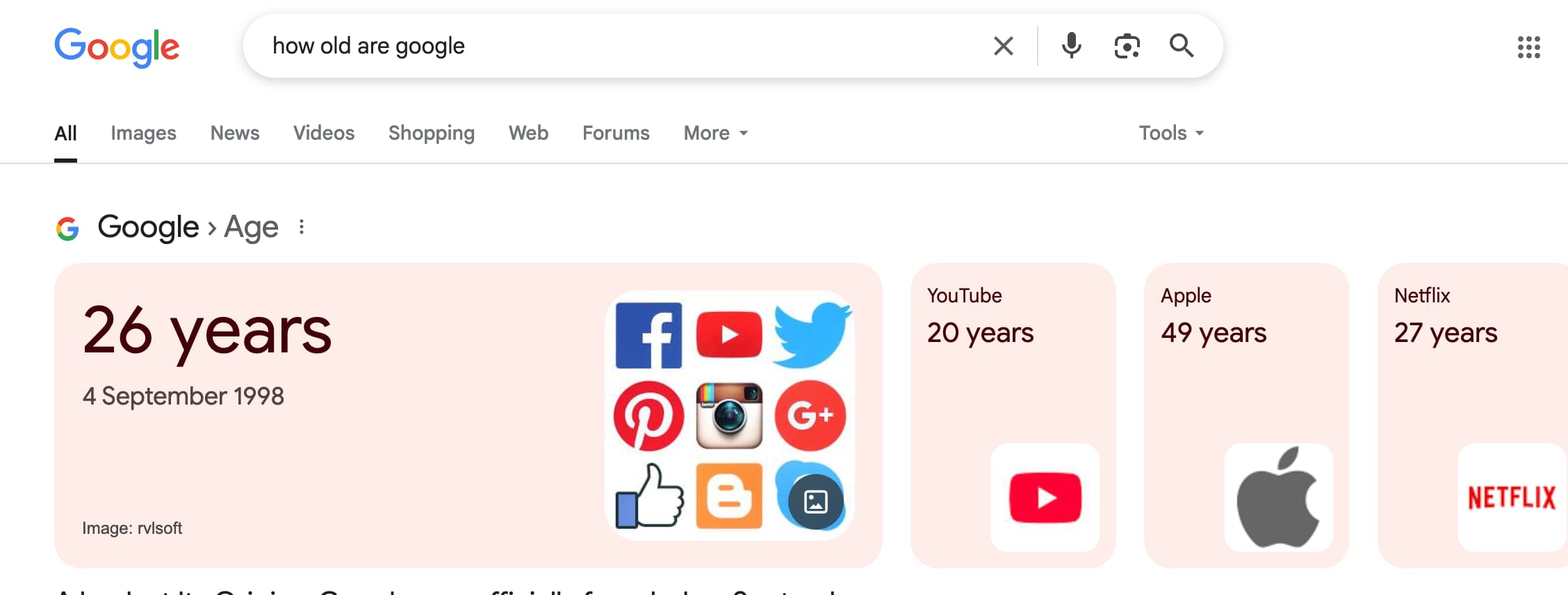
As you can see, there is already an instant answer to my query at the top of Google without me having to rummage through a website to find out the information. This is just one example of many types of zero click searches, which you’ll find out more about in the next section.
Types of zero click searches you must know
So, there are many different types of zero click searches you will see in the SERPs, including:
- Featured snippets
- AI overviews
- Local packs (map packs)
- Knowledge panels
- People also ask
- Direct answer boxes
Let’s start with featured snippets!
#1 Featured snippets
Featured snippets are excerpts of highlighted text that appear at the top of your Google search, also known as ‘position 0’. They typically provide a very quick, concise, and snappy answer to your query and often show up when it’s an informational query, rather than transactional or navigational.
Here’s what one looks like:
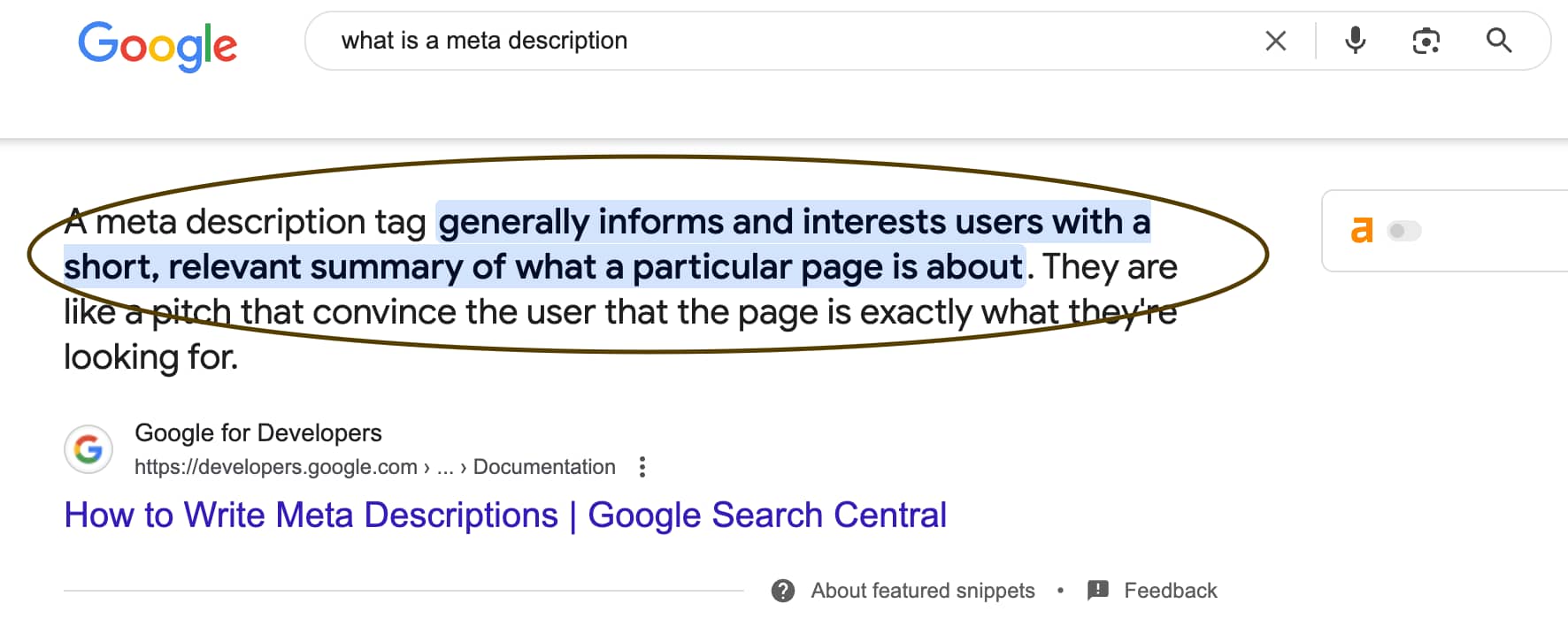
Where it is highlighted blue, this is what is classed as the highlighted excerpt, but the entire paragraph is considered as the featured snippet, as it’s considered the best content on Google (according to the algorithms) for that specific search query.
#2 AI overviews
Released in May of 2024 in the US, AI overviews are still considered a new form of zero click search, but it’s becoming more and more popular on Google search. In fact, they now appear in up to 47% of every search query, according to a study by Botify.
AI overviews, in summary, are similar to the featured snippet in that it’s a summary of information at the top of Google, but AI overviews are instead made by AI by sourcing information from across the web and writing a response that best answers the query into a short, concise piece of text. Here’s an example below:
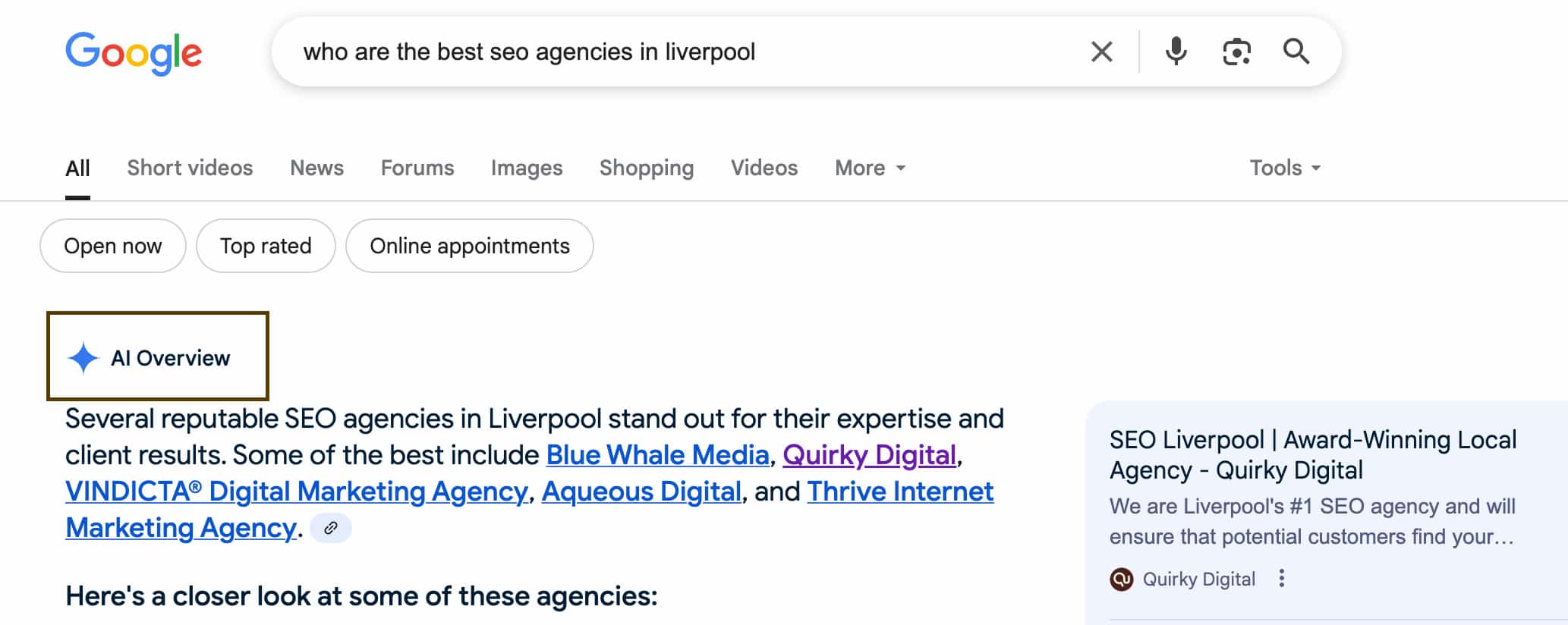
As you can see from the highlighted box, this is an AI overview at the top of the Google search for this query. It does include citations that you can click into, but generally, you can get a good view of what you need from Google Gemini’s large language model.
#3 Local packs (map packs)
Local packs, or map packs, show the locations of nearby businesses that match the query that you search for. For example, if you were to search ‘best restaurants Liverpool’, this is what would appear in the SERPs:

A lot of the time, you can get all the information you need from these local map packs, as you can gather important details like: opening and closing times, reviews, exact location, name of the business, etc.
Google’s algorithm uses three metrics to determine what is right for the local pack: relevance, distance, and prominence – and that is why you get such useful and relevant results.
#4 Knowledge panels
Knowledge panels are a box of information that will appear on the right-hand side of your Google search when you search for certain entities (brands, people, places, and things). As you can see from below, this is what shows up when you search for the company ‘Nvidia’ in Google:
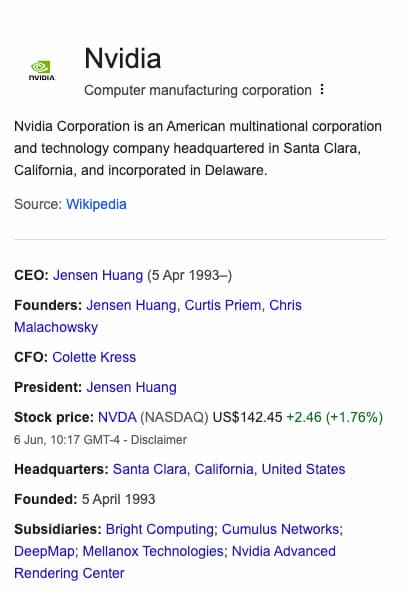
As you can see, it gives you a breakdown of core parts of the company, such as the CEO, CFO, stock price, when it was founded, the HQs, and many more – all without a click of a button.
#5 People also ask
Next on the list is ‘People Also Ask’, which is essentially comprised of showing you related questions from your initial Google search. If the zero click question interests you, you can click on the question, and it’ll give you a summary of that question within the box.
E.g. if I were to ask Google ‘How to improve my 5k time’, as you can see from below, it gives me some relevant questions related to my initial query that may further improve my knowledge:
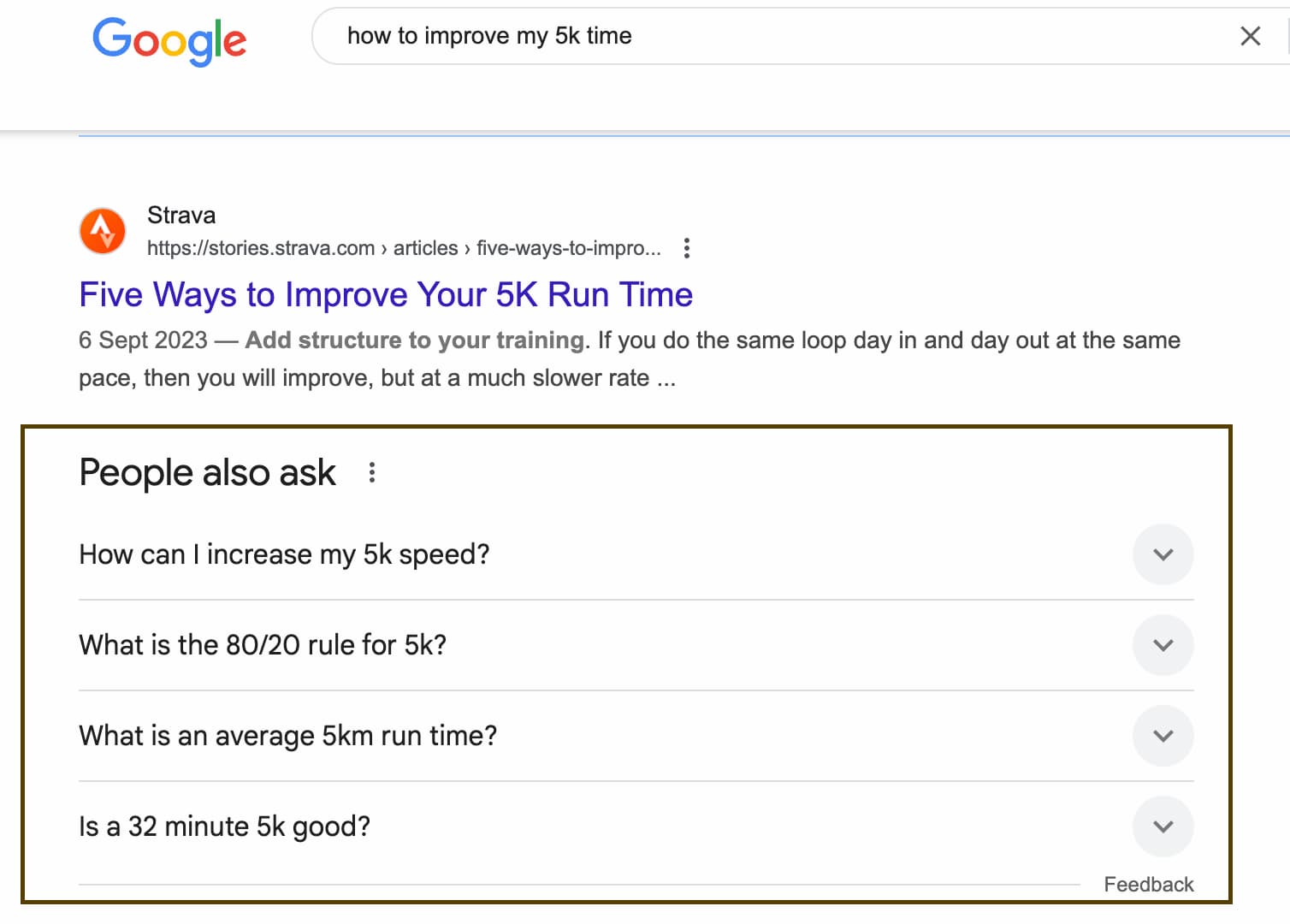
It’s often filled with questions that keep you intrigued and searching through the Google SERPs until you’ve found all the answers you want.
#6 Direct answer boxes
And last but not least, and probably the most uncommon, are direct answer boxes, which are basically just a type of featured snippet but give very short answers to queries, including facts, dates, definitions, statistics, locations, and more. Here’s a quick example of what it looks like:
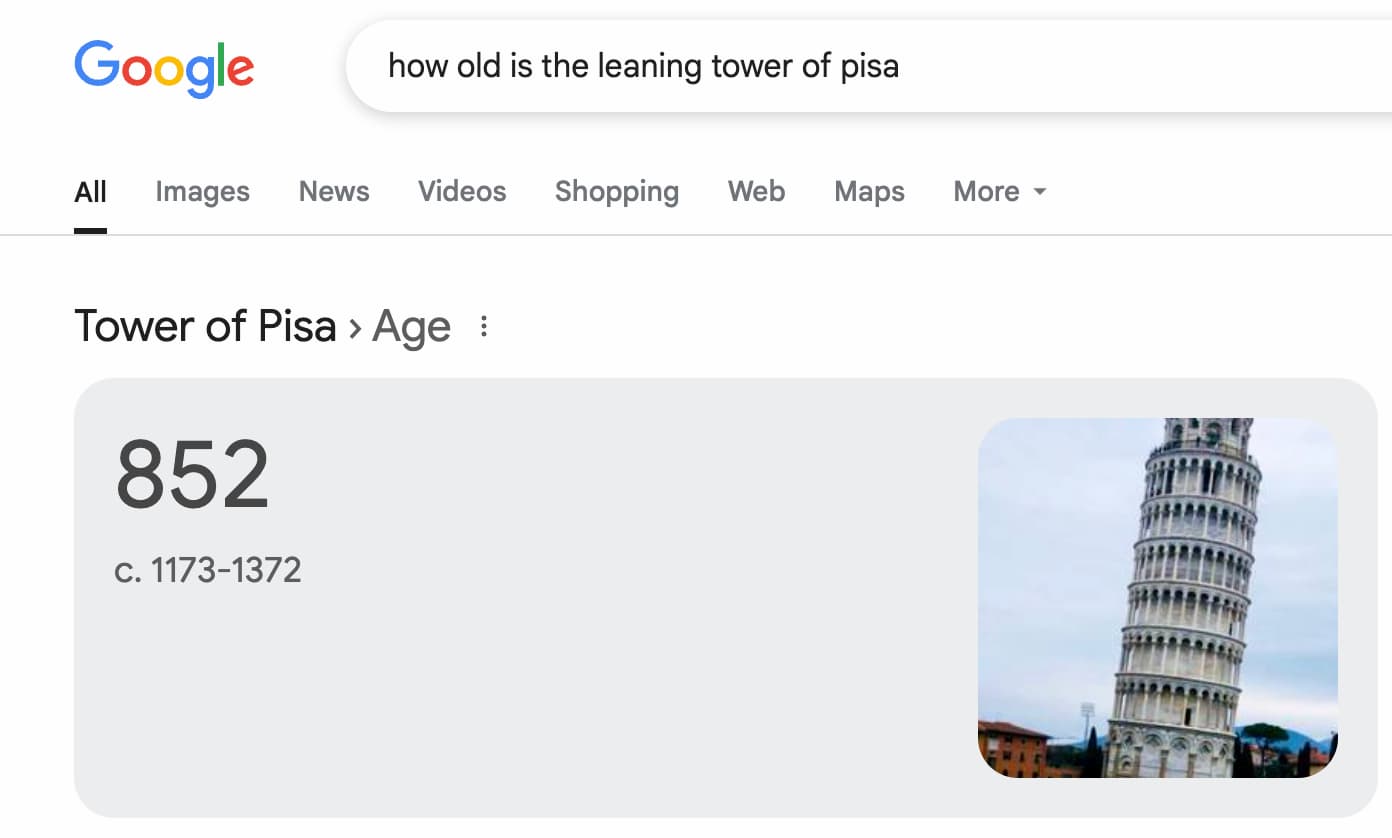
These are one of the most effective no-click searches, however, because they typically answer a simple user query with very straightforward information.
How are they impacting your SEO everyday?
You may be thinking, well, if no one is clicking on my website for further information or to look at what I have to offer, then it must be impacting my SEO performance, right?
And yes, it certainly is; impressions are far more important than they used to be now with zero click searches increasing, along with SparkToro showing that 59.7% of searches resulted in zero clicks in the EU. So, how is this impacting your SEO right now?
- You’re having to work harder to show up in the zero click results
- Gives you more opportunities to show up in organic and GEO (generative engine optimisation) search
- Gives you more opportunities to enhance your brand visibility
- It boosts your need to become a trusted and credible business
- Every impression matters more than ever
- Analytics may seem more misleading without context
It’s not something you should be afraid of; it’s just something your business needs to adapt to. Remember, people will always need businesses. It’s just going to be a case of finding more ways to optimise for zero click searches, which we’ll go onto now.
7 easy ways you can optimise for zero click searches
Here are 7 easy ways your business can optimise for zero click searches so you don’t fall behind in this new way of search and generative engine optimisation:
1. First protocol, your content structure
For your content to be suitable for so many different zero click searches, as well as the SERPs themselves, there are a key component we’ve seen work to overcome your incumbent:
- Paragraphs should be no longer than 4 lines
- Answers to queries need to be short, concise, and direct
- Adding H2s and H3s are vital for comprehension
- An active tone of voice works well
- Making it easy to understand so any reader could get it
- Using high-quality UX techniques, such as bullet points, tables, lists, etc
Answering relevant questions within your niche is super important if you want to be visible often in the no click searches. The more times you show up in these areas, the more potential customers/clients will trust and want to work with you.
2. Your keyword research and strategy will have to be altered
If the goal is to be more visible in the SERPs and show up in zero click search (especially with all the different types), you’ll need to alter your keyword strategy. Knowing that each type of zero click search brings something different to the table is so important because then you can tailor your strategy to the ones you want to feature the most.
For example, if you pay more attention to the keywords that are bringing you traction to the local map pack, or your featured snippets, you’ll know to go further down that avenue in your keyword research. This is where an SEO agency can really pinpoint your struggles and find the best solution to propel you in the direction you want to head.
3. Structured data is a must
Structured data, more now than ever, is vital to your rich results and zero click performance. It basically helps by:
- Providing Google with clear details about your reviews, prices, breadcrumbs, event times, and so much more important data
- Implementing FAQ schema may help you appear in more ‘People Also Ask’ questions
- Your products may appear in more visual formats (featured snippets, AI overviews, etc)
- It puts you into Google’s knowledge graph, making your company eligible for inclusion in knowledge panels or to be cited in AI overviews and direct answer boxes.
- Structured data (such as LocalBusiness schema) will massively help reinforce NAP details (Name, Address, Phone) and opening hours
There are so many factors that structured data can improve on your website. It is a bit jargon heavy, but if you get technical SEO right, it makes sure you’re not just optimised for on-page, but off-page too.
4. Adding schema markup
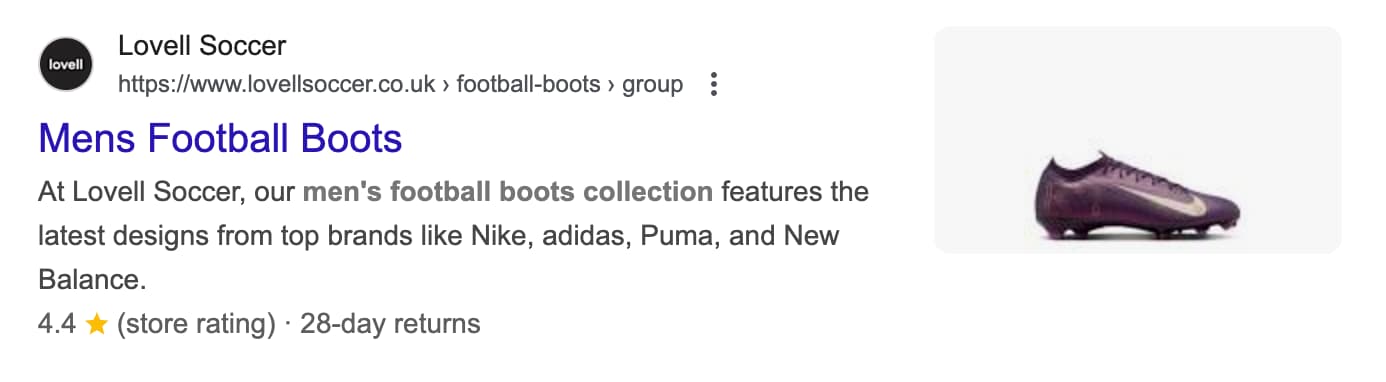
Without schema markup, you can’t implement your structured data from above. This is basically a language you use to communicate with Google in order to give it more information about what your website’s content is. For example, if you typed in ‘football boots for men’, you can either get this:
Or, this:
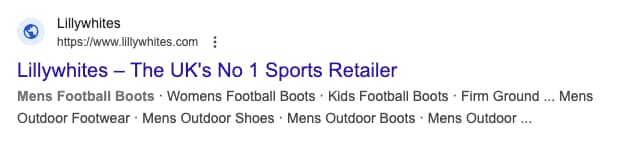
As you can see, there’s a clear disparity in which one has schema markup and which one doesn’t. And even just from this small implementation, how much more would you trust the top one compared to the bottom one? It’s worlds apart.
When it comes to the type of schema markup, just make sure you’re only adding schema that is relevant to the content. For example, if you add FAQ schema when there are no FAQs, that will be useless. More on schema markup here!
5. Local SEO for visibility
Even if your campaign is not a local SEO campaign, you still should optimise for it if you want to appear in no click searches, especially for local map packs, local featured snippets, and knowledge panels. Make sure to do these few things to get the best performance:
- Start or optimise your Google Business Profile
- Get real Google reviews from real people for your website
- Build local links to your website, whether that be press or guest posts
- Make sure your NAP details are clear and in relevant directories
6. Don’t just focus on traditional search now
Of course, Google is the cornerstone of SEO and GEO search, but it is rapidly changing, and optimising your content to feature in ChatGPT, Perplexity, AI overviews, social media channels, etc., is what is going to give you the biggest bang for your buck.
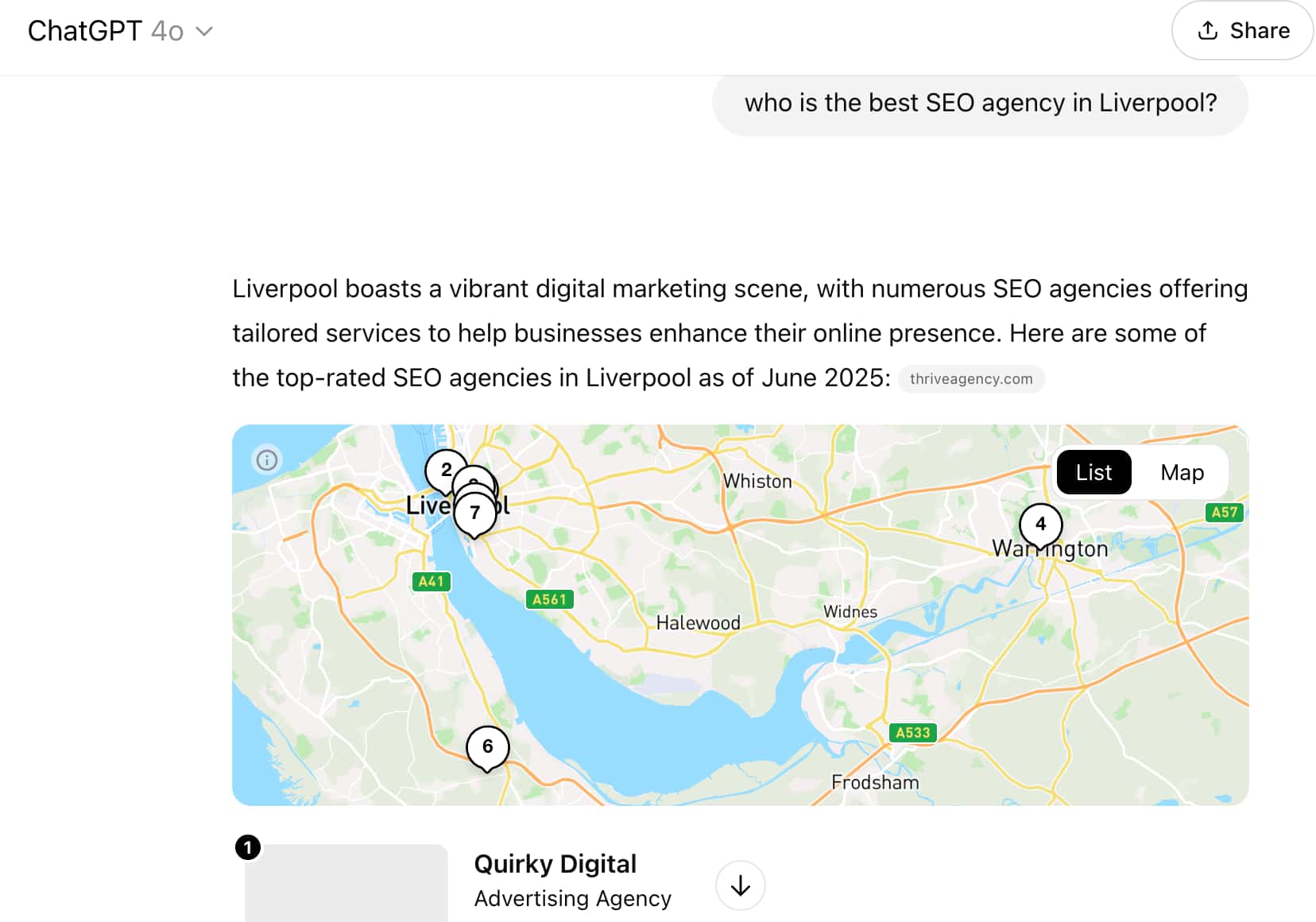
^ As you can see, at Quirky Digital, we are recognised in ChatGPT as the best SEO agency in Liverpool, and that is because we didn’t neglect the importance of new search.
7. Focus on E-E-A-T guidelines
Although it’s not a direct ranking factor, there can be no argument that E-E-A-T (experience, expertise, authoritativeness, and trustworthiness) is a massive contributor towards the success and visibility of your brand online.
If you look at any brand you buy from, they’re going to be experienced, have expertise, be authoritative in their niche, and trustworthy – otherwise you wouldn’t buy from them.
| E-E-A-T type | How to improve it for your business |
|---|---|
| Experience | Have actual skin in the game and don’t be afraid to show it off on your website – share real customer stories or case studies |
| Expertise | Have a dedicated ‘About Us’ page to show off the experience and expertise of the staff |
| Authoritativeness | Build high quality backlinks to boost your presence within your space |
| Trustworthiness | Go above and beyond for every customer/client, display clear contact info, and show off your customer reviews |
The Quirky roundup
At the end of the day, search is adapting, and so are we. You don’t have to have everything figured out right this second, but focusing on a long-term SEO and GEO strategy while taking advantage of the quick wins along the way will certainly put you a cut above the rest.
The trend of zero click searches is clearly on the up, and you and your businesses have to be ready to ride the wave. As long as you’re not giving up and instead monitoring your results/adapting that strategy, along with taking some insights from our blog post today, you will have a really fun time growing your business and getting the results you deserve.
If you don’t really know how to implement these strategies, on the other hand, at Quirky Digital, we’re always a phone call (0151 662 0152) or an email away (hello@quirkydigital.com) – or you can fill in our ‘Get a Quote’ form, and we’d love to help you in your future endeavours.