
In 2026, you probably see people/companies all over the news and think to yourself, “How do they get themselves on there?” As you go about your day, thousands and even millions of businesses are trying to receive media coverage across the globe.
Although you may have heard of traditional PR, there is quite a difference between digital PR and traditional PR, and now, in the days of social media, digital PR is becoming one of the best ways to get people to hear about you and your business.
However, what is it, why is it beneficial, and how does it matter at all in SEO? Well, that’s what we’re going to try and unpack here in this blog post today so stick around to see why you may want to try this for yourself.
What is digital PR?
In simple terms, digital PR (digital public relations) is a type of marketing strategy where you use all the online platforms available to build credibility and boost your online presence. The main goal of digital PR is to portray your brand as a trustworthy, authoritative company that is an expert at what they do, using the authority of another well-regarded company.
It doesn’t matter how this is done, whether it be via social media, natural blog content, guest posts, podcasts, videos, etc., there’s always that you and your company can be seen online to influence how others perceive your brand. Just remember that everything that goes online about your company will be perceived and, fortunately or unfortunately, judged by others.
Traditional PR vs digital PR (the old vs the new)
Although at their core, they’re trying to achieve the same goal of representing a brand in the best way possible, the difference between traditional PR and digital PR is that they do it in different ways.
Traditional PR marketing methods
- Connecting with journalists to get featured in print publications
- Get quoted in newspapers
- Being heard on the radio
- Be seen on TV
- Be shown in magazines
Digital PR marketing methods
- Connecting with journalists to get featured in digital publications
- Get interviews with online publications
- Sharing organic social media content
- Recording audio and visual content to place on online platforms
- Gaining links and brand mentions from well-known sites to boost your website’s authority
- Using paid media through social media platforms to be seen online more frequently
- So many more!
It’s almost a never-ending process of marketing methods that are included in the huge Venn Diagram of digital PR as a whole, and this is why so many businesses are turning their heads and looking to get a piece of the action.
A few examples of how digital PR can look
For your business, a link-building and digital PR strategy really can be one of the most satisfying and gratifying forms of marketing, in our opinion, as you’re seeing all the work you’ve done and continue to do behind the scenes being praised and shown in a good light. Here are a couple of examples of recent press we’ve gained here at Quirky Digital:

In this press release, which you can read here, The Guide Liverpool spoke about the recent Global Search Award we’ve won. As you can imagine, this was not only a huge achievement for our company, but it was nice to be recognised for our team’s efforts.

In this example of digital PR, the Liverpool Chamber, a well-known voice for Liverpool in the UK, published a press release on Quirky Digital being nominated for the ‘Business of the Year Award (Under 30 employees). Not only does this help boost our reputation here at Quirky Digital, but it shows that we’re always trying to innovate and change the game within the SEO field.
The true benefits of digital PR
Now that you’ve seen some live and real examples of how digital PR can look and know exactly what it is, what are the actual benefits you and your business can receive from implementing this into your marketing mix:
- It will make you a more trustworthy company in your industry
- It will boost your brand awareness
- It will help your SEO performance (#1 on Google averages 3.8x more backlinks than the rest of the first page)
- You will see more leads and conversions for your business
- It helps your audience decide whether they believe in your values
- You may get more digital PR opportunities after this
- You will broaden your reach to new target audiences
- You may get opportunities to speak to other big companies within your industry or elsewhere
There really is an endless list of what you can benefit from with digital PR, but chances are, if you’re reading this, you’re interested in how it can help your SEO performance the most—so let’s take a look at that below.
Why digital PR really matters in SEO?
Within SEO, there are so many different metrics that Google uses to rank your website in positions that they believe you deserve to be in. However, some of the most important ranking factors are your domain authority and the quality of your backlinks.
Digital PR gives you this in abundance. To illustrate this concept, consider our website’s backlinks (referred to as referring domains).
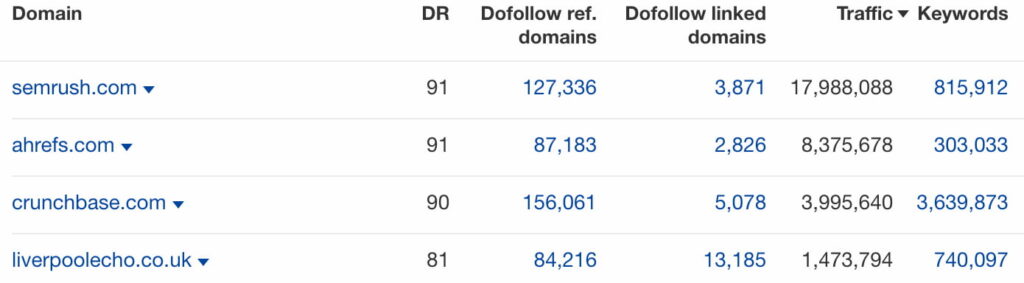
As you can see from the image above, these are a few of our high-quality backlinks from some of the biggest companies within the SEO field (Semrush and Ahrefs), along with big news publications to boot.
What this shows to Google is that we’re trusted to feature on some of the most well-regarded websites within our space and elsewhere. Therefore, this signals to search engines that we have better credibility, we’re more trustworthy for people to interact with our site, and thus, improving our performance as a whole.
How you can leverage the power of digital public relations for SEO
Whether you’re running an SEO agency, a digital PR company, or simply just a business that’s interested in implanting it into their marketing strategy, there are so many ways that you can leverage the power of digital PR, but as an SEO agency ourselves, we’re going to run through how you can use it to boost your SEO performance on the search engine results pages (SERPs).
1) Make sure your content is original, relevant, and well-written
You can receive media coverage in many ways, and one of them could be that highly-regarded websites may use your content as a source within their press releases. Therefore, you have to make sure your content is organic, SEO-optimised, user-friendly, well-written, and many other factors.
Think of it as if you were the reader. Would you want to read the pieces of content you’re producing? If not, then something needs to change in your content marketing strategy.
2) Selecting the right types of sites to get in touch with
When choosing sites you want to work with, they need to actually be relevant to your niche, or they need to be a big news publication that can help with authority. Here are some things to look for when choosing sites to get in touch with:
- Do they have high levels of traffic?
- Do they have a relevant audience that cares?
- Do they create a customer journey with their press releases?
- Are their press releases engaging?
- Do they have high domain authority?
3) Building natural relationships with journalists
Now, this can be a tough one because journalists will receive hundreds, if not thousands, of emails a day, so your email has to grab their attention and get straight to the point (and even then, you’re not going to get seen a lot of the time).
However, to build great relationships, you need to focus on:
- Engage with journalists on other platforms like LinkedIn and X to show genuine care, interest and support for their work, not only what they can do for you
- Having basic manners: “Hello, how are you?” “Thank you for your time,” “Thank you for using our commentary,” etc
- Use friendly tones—journalists are people at the end of the day
- Make sure you follow up consciously; journalists are busy and could have a million things going on at once (don’t overdo it though)
- Be responsive to respect both your time and theirs
- Research and reach out to journalists who are relevant to your story
- Provide valuable, insightful and unique information where possible
- Think about timely stories they may be interested in
- If you’re struggling to get your emails even opened by a journalist, then try making your subject lines unique and eye-catching.
4) What media platforms should you focus on?
To be in the press, it doesn’t always have to be you who reaches out to the journalists. If they see that you’re doing great work, they can sometimes reach out to your business and ask to interview you. Therefore, what media platforms should you focus on producing content on?
- Having relevant and insightful blogs related to your products or services
- Having a brand and following on social media
- Try to speak on relevant podcasts, or create your own
- Try to land guest posts on really relevant and high-quality sites
- Use QWOTED to find relevant press opportunities
5) Types of digital PR you should focus on getting
Some techniques can unfortunately not work as well as you’d have first hoped, but here are some of the best digital PR techniques you can use so you’re not wasting your time on anything else:
- Reactive and timely PR
- Inbound PR
- Expert Commentary
- Inbound PR
With all of the information you now have on what digital PR is, how it can benefit you, and how you can use it to improve your SEO performance, we hope you’ve got everything to structure your digital PR campaigns.
However, if you feel that it will take a lot of time and you’d like our digital PR specialists to handle it, please don’t hesitate to contact our team today. We’ll ensure you receive the media opportunities you deserve.