
When it comes to getting your content, services, and products ranking on Google, they don’t just magically appear on the SERPs (search engine results pages). There are processes that you as a business need to take in order to get them ranking as highly as possible and website indexing is one of them.
It’s an absolute necessity to index the pages you’ve curated because, without it, you won’t be visible to the very thing you’re trying to sell or promote to your audience.
That’s why, in today’s blog, we’re going to explain exactly what website indexing is, how you can get your website indexed on Google and other search engines, best/worst practices, and overall how it’s going to impact your site. Let’s get to work!
What is website indexing?
In simple terms, website indexing is basically the process that search engines use to store and organise web pages so they can actually be considered for and appear in search results. If your web page isn’t indexed, it won’t appear in the search results, but it has a chance of appearing if indexed properly.
As an analogy, website indexing is similar to adding a new contact to your phone. When you meet someone, you save their name and number so you can find them later. If you don’t save it, you won’t be able to call or text them. Similarly, search engines “save” (store and organise) web pages in their index so people can find them in search results.
Research carried out by Onely showed that 16% of valuable pages on massive websites aren’t indexed and being shown to their audience, which could be the difference between being a profitable business or not.
The ins and outs of how website indexing works
Below, I’m going to show you exactly how search engine/Google indexing works in a simple-to-understand table so you hopefully never have to ask Google again. This is exactly how the search engines do it:
| Step | What Happens | Why It Matters |
|---|---|---|
| Crawling | The search engine robots come and visit your website to check the content | If the bots can’t find your page, it won’t appear anywhere |
| Storing | The bot will save important info such as text, headings, images, meta descriptions, etc | Shows search engines what’s on your page for them to consider |
| Indexing | The indexing process starts, making sure your page is added to its records | Your page is now eligible and will appear on the SERPs |
| Ranking | The search engine will use all indexed pages to show the best results for each search term | A well-indexed page with best SEO practices in place has the best chance of ranking the highest |
| Issues | If the web crawlers, robots, or spiders can’t find your page, it won’t be added to their index | A page that doesn’t show on their index won’t be shown on the SERPs and target audience |
Each step is just as important as the other, but ultimately you’re looking to do one thing as a business: rank on the first page (preferably 1st on the SERPs) for your relevant keywords. Thus, these are such important steps to remember.
How to get indexed (step-by-step best practices)
So, what are the best ways to get indexed as a business looking to improve their visibility online? Well, we at Quirky Digital have put together some of our best practices for how to appear on the SERPs as often as possible into an easily digestible step-by-step guide:
- Making content worthy of the SERPs
- Adding XML sitemaps to Google
- Ask Google Search Console to index a URL, one at a time
- Having no plagiarised or duplicate content
- Improve your page and website speed as a whole
- Having internal links throughout your website
- Having a solid backlink strategy
- Make sure you’re mobile optimised
- Fix broken links immediately
- Remove any Noindex tags
#1 Making content worthy of the SERPs
In line with Google’s helpful content update in September 2023, you can’t get away with just plain, old boring content anymore. It needs to be actually helpful for the user in finding the answer to their query or search.
Rather than focusing on what conventional SEO wanted with just keywords, updating your meta description and giving vague answers, SEO has evolved massively since then and search engines require a lot more detail. Here’s what you can do to level up your content to align with the E-E-A-T and Google’s helpful content update to have only the best content on your site:
- You have to write for the person on the other side of the screen, not search engines
- If you can provide unique statistics, infographics, case studies, and research, this is massive
- Align everything back to E-E-A-T guidelines
- Get to know the quality rater guidelines
- Content needs to show ‘Who’ created the content, ‘How’ the content was created, and ‘Why’ was the content was created
#2 Adding XML sitemaps to Google
This is one of the quickest and fastest ways to help your website indexing and all you have to do is this:
- Go to Google Search Console
- Set up if you haven’t already done so
- Press ‘Sitemaps’ underneath ‘Indexing’ from the left sidebar
- Plug in your URL
- Press ‘Submit’ and you’re done!

#3 Ask Google Search Console to index a URL, one at a time
While you’re on Google Search Console, another way you have a greater chance of getting your website/pages indexed is by individually entering the URL you want to appear on the SERPs.
We’ll show you an example of how we’d do it for our very own website here at Quirky Digital:
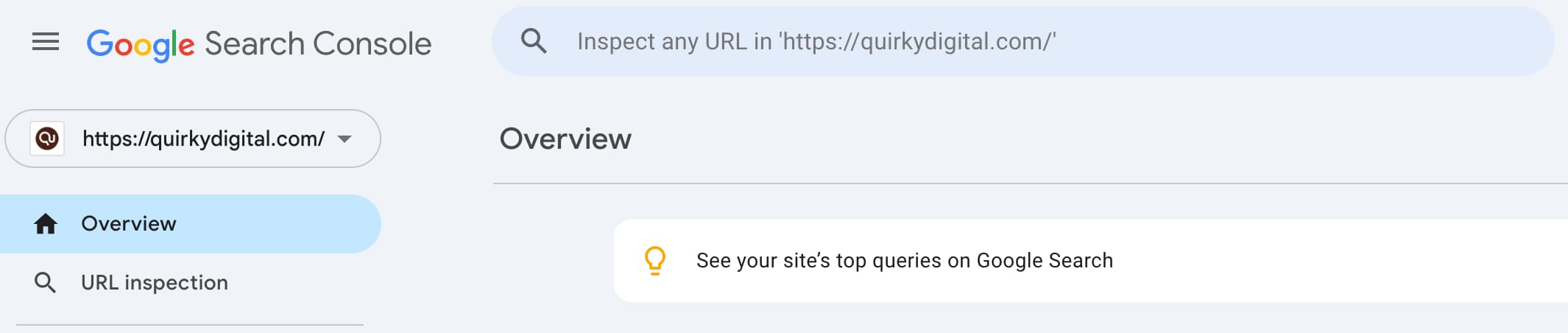
Step 1 – Where the search bar is at the top, press this, plug in the URL you want indexing, and hit enter
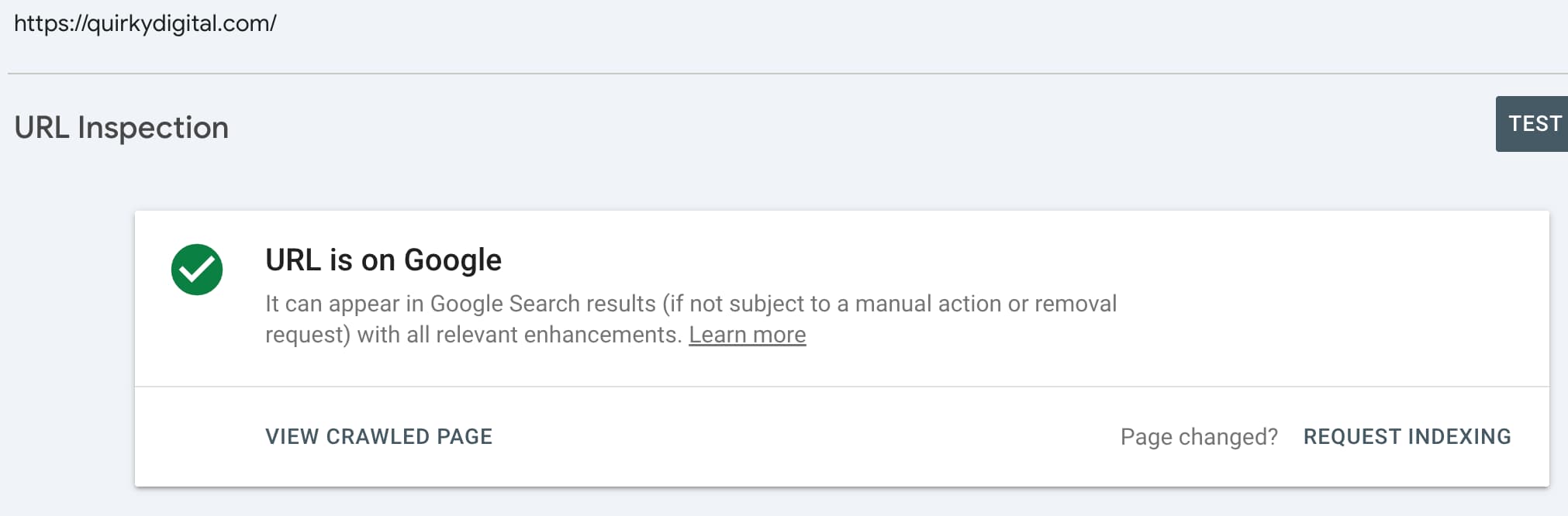
Step 2 – Your website may say ‘URL is not on Google’ but ours obviously is otherwise you wouldn’t have found us
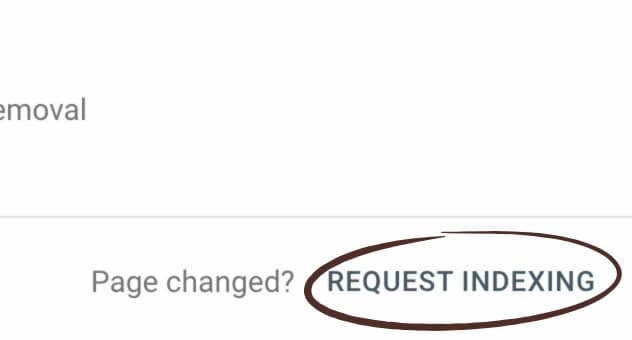
Step 3 – Where it says ‘Request Indexing’ press this
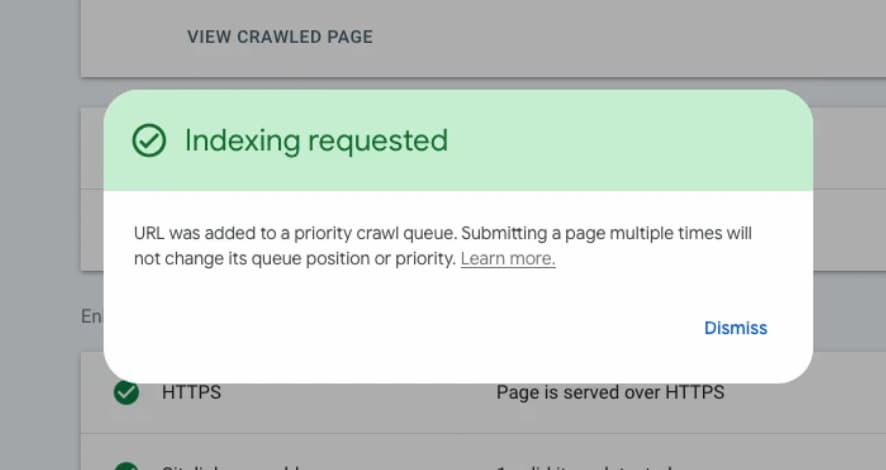
Step 4 – Once it pops up with ‘Indexing Requested’, just press ‘Dismiss’ and you’re done
#4 Having no plagiarised or duplicate content
According to Raven, 29% of pages have some form of duplicate content in them, meaning they don’t have the highest chance of performing well and being indexed. Robots, crawlers, and spiders alike will have trouble defining what page is what if you have duplicate content, potentially leading you to have the wrong page indexed.
To check how much duplicate content you have on your website, you can check the Crawl Stats Report in Google Search Console, but to action this, you may need some technical SEO support to help you make the necessary changes.
#5 Improve your page and website speed as a whole
One of the most important metrics of your site as a whole and for indexing is the speed of your site. Crawlers actually use a crawl budget (a timeframe in which the robots can crawl your site), so if your website is too slow, it may run out of time before it can crawl and index any more.
This could be the difference between getting a lead or not getting a lead. Some important factors to note for site speed are:
- Optimise your images (compressing them)
- Use browser caching
- Reduce the amount of CSS and Javascript
- Minimise the amount of HTTPS requests
- Limit the amount of redirects used
- Look at getting a Content Delivery Network (CDN)
In terms of the best tools to fix your website speed, our technical SEO expert Carl said “The best tools to use to fix your website are Nitropack and WP Rocket if you are using WordPress. For Shopify, I would recommend a developer but if that isn’t at hand, then there are tools like TinyIMG and SEO Ant.
For the best page speed analysis tools, I would recommend both Free and Paid, are Page Speed Insights, GTmetrix, Web Page Test, Pingdom and DebugBear.”
#6 Having internal links throughout your website
An internal link, in short, is essentially a link within a page you’ve written that takes you to another place on your site. Here’s an example below:
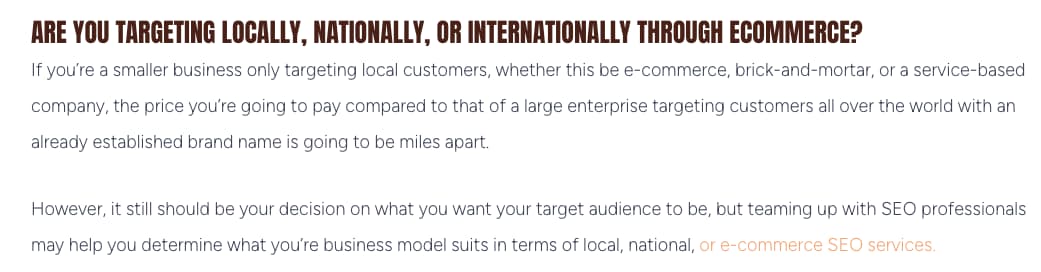
As you can see from this blog of ours, where the text is highlighted in orange, this link will take you directly to our e-commerce SEO services that we offer. As a guideline to use, you should aim for at least 3-5 internal links per page.
#7 Having a solid backlink strategy
Why should search engines index your pages if no one knows who you are? Well, that’s where having a solid backlink strategy can help. If you have loads of reputable websites across Google and other search engines within your niche (or just massively well-known sites) linking back to your website, then the search engines will see you as a more trustworthy company in your field.
As you can see below, DR, backlinks, and Ref. domains are the main indicators of how well your backlink strategy is working if you’re putting a huge focus on it.
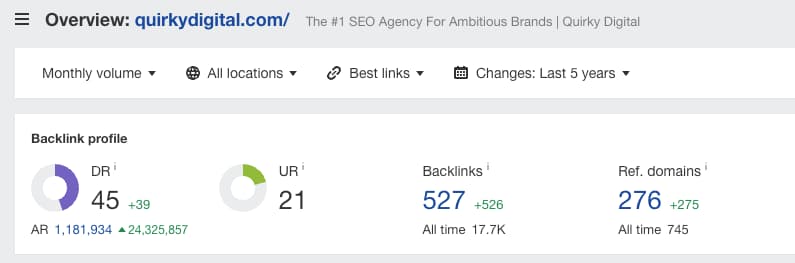
Some of the steps we’d take to get more backlinks to your website would be:
- Create unique, high-quality content that other sites can’t resist but link back to
- Using digital PR to your advantage
- Publish guest posts on relevant, high-performing sites in your niche
- Reach out to journalists to comment on relevant media requests within your industry
- Place link insertions (niche edits) on relevant sites
- Getting mentioned in a best ‘X’ article
- Creating unique data, surveys, research, or statistics
#8 Make sure you’re mobile optimised
According to recent research, 63% of all users on search engines are coming from mobile devices. Therefore, if you’re not optimising your website for phones as well as tablets and laptops, your performance will suffer massively.
Just ask yourself how much you search on your phone versus your laptop and you’ll probably find you do more searching on your phone, so your website needs to be optimised for mobiles if you want a higher chance of being indexed.
#9 Fix broken links immediately
If you have many broken links in your website, this can not only signal to Google that your website isn’t SEO-optimised for the best user experience, but it can confuse the crawlers and make it extremely difficult to index your URLs.
In our opinion, one of the best tools you can use to fix broken links is to use Google Search Console or Screaming Frog. Once again, these can be extremely technical fixes, so if you want to speak to an expert on this topic, get a quote from us here at Quirky Digital today.
#10 Remove any Noindex tags
And last, but certainly not least on our list of best practices, is removing any Noindex tags. This is because, with Noindex tags, it prevents your URL from being indexed. Thus, removing them instructs the search engines to include them as crucial URLs in the indexing process so they can actually appear in the results pages.
To remove Noindex tags, this will vary depending on the CMS you use, so a quick Google search of, for example, ‘How to remove a Noindex tag from WordPress’ will help you a ton.
Why your website isn’t getting indexed on the search engines (worst practices)
On the flip side, you may be wondering why your website isn’t being indexed on the search engines, and first of all, what I’d say to you if you haven’t done them already is to apply all the steps we said in the previous section first. However, there are a few reasons why your website may not be getting indexed:
- Robots.txt file is blocking search engine bots from crawling
- You’re just a very new website
- Poor site structure
- You have too many redirects
- No or little backlinks for trust signals
1. Robots.txt file is blocking search engine bots from crawling
If you do a deeper dive into why your website is not being indexed, it could be because your robots.txt file is blocking the crawlers from being able to index your site. To check and fix this if it’s the case, follow these steps:
- Type in the URL you want to inspect on the URL inspection tool
- Use a robots.txt validator tool to find out what rule is blocking your page from being indexed
- Fix or remove the rule that is blocking your URL from being indexed
If you need some support with this, we totally understand; Quirky Digital are always a call away.
2. You’re just a very new website
Sometimes, search engines will simply not index URLs that are very new to Google. Think of it, if you are new to something, it would be hard to trust your expertise and it’s no different with Google. They have to get to know you first and then decide whether your content is worth indexing.
3. Poor site structure
Think of it from a user’s perspective for a minute, if your website has poor website structure for both content and technical aspects, they’re going to find it difficult to read through. Never mind the search engine crawlers who are trying to navigate, understand, and index your pages. Site structure should be a massive part of your SEO strategy.
4. You have too many redirects
As we discussed before, search engine crawlers have a ‘crawl budget’, meaning that if you have too many pages to seep through, a slower loading time, and redirect loops that confuse them, it may prevent them from actually indexing your core pages.
5. No or little backlinks for trust signals
Similar to being a very new website, if you don’t have backlinks from reputable sites or industry leaders, why should Google trust what you’re saying? This could affect the amount of pages that get indexed and pushed to the Google search engines.
For example, below is just a glimpse of our backlink profile:
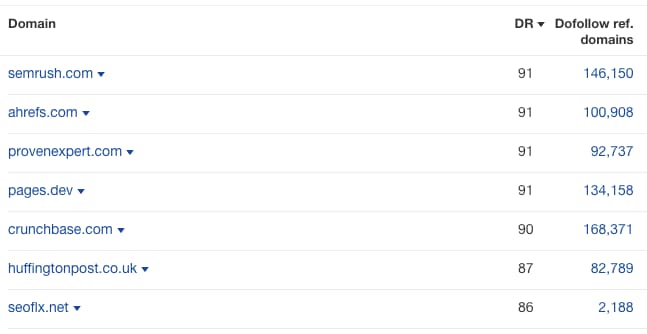
As you can see, we’re not only receiving backlinks from trusted SEO-related websites but also featuring in media publications for relevant SEO comments. You can use these to improve your strategy tenfold.
Getting to the top of Google with Quirky Digital
Let’s be honest, getting indexed and recognised is not easy and if it was, everyone would be on the first page, but that just can’t be the case, unfortunately. It takes deep knowledge of how search works, doing the basics right for an extraordinary period of time, and true implementation.
If you want to get your website recognised in your industry so you can start to become a thought leader within your niche, our SEO agency has helped countless businesses in numerous niches reach their goals, while keeping a clean slate of 5-star reviews to follow.
To get in touch with a member of our team today either call us at 0151 662 0152, email us at hello@quirkydigital.com, or simply fill out our ‘Get a Quote’ form in the top right corner of our website. We can’t wait to see what you have going on and what the future could hold!